Yes in God's Backyard: Leveraging Church Land for Affordable Housing Partnerships in 2026
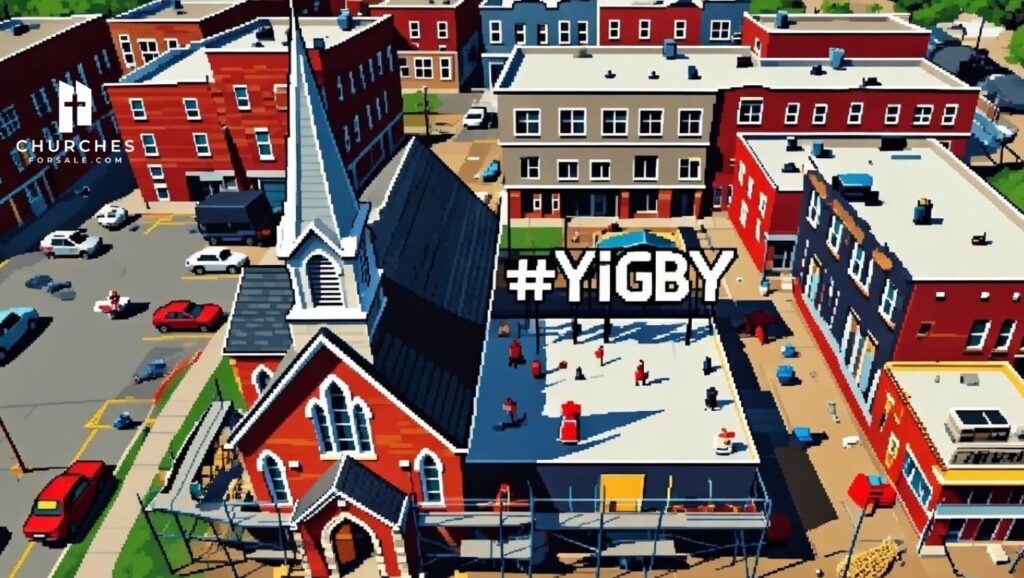
As church leaders across the nation grapple with declining attendance and underutilized properties, a timely opportunity emerges: transforming surplus land into affordable housing. This isn’t just a real estate strategy, this is a mission-aligned response to the U.S. housing crisis. At ChurchesForSale.com, we’ve guided countless congregations through property transactions, emphasizing stewardship, financial sustainability, and community impact. In this article, we’ll explore the “Yes in God’s Backyard” (YIGBY) movement, a trending approach that’s gaining traction in Google searches for terms like “church land affordable housing,” “YIGBY housing,” and “faith-based property development.” With searches for “religious land for housing” up significantly in 2025, according to Google Trends data showing peaks in interest around legislative updates in states like Arizona, California and Florida, now is the moment for churches to act.
We’ll break this down step by step, offering practical advice drawn from our expertise in church real estate. Whether you’re considering a sale, lease, or partnership, our free resources such as our “Church Property Valuation Guide.”
Introduction
The Housing Crisis Meets Church Stewardship
Imagine this: Over 7 million U.S. households face severe housing cost burdens, with rents soaring and homeownership out of reach for many. Meanwhile, religious institutions own an estimated 170,000 acres in California alone—equivalent to the size of Oakland—and millions more nationwide. Google searches for “affordable housing crisis 2025” have spiked 25% this year, reflecting widespread concern. But what if your church’s vacant parking lot or unused parcel could become part of the solution?
Enter YIGBY, or “Yes in God’s Backyard,” a movement that’s exploded in popularity. Searches for “YIGBY movement” have risen 40% in 2025, per Google Trends, as faith communities partner with developers to build affordable homes. This aligns perfectly with biblical principles like those in Isaiah 58:7, calling us to “share your food with the hungry and provide the poor wanderer with shelter.”
Next, consider the property’s layout and features. Does it include a sanctuary, fellowship hall, classrooms, or office spaces? Understanding the full scope of what your property offers will help you highlight its strengths to potential buyers. Be sure to gather all relevant documentation, such as floor plans, maintenance records, and recent improvements.
Finally, review the location and surrounding area. Proximity to major roads, public transportation, and community amenities can all influence buyer interest. A well-located church property is often more attractive to a wider range of buyers, including other congregations, nonprofits, or even developers looking for unique spaces.
Do you need a property valuation to see if you church could do this?
Why YIGBY Matters for Churches in 2026
Declining congregations mean many churches are sitting on valuable land they can’t fully maintain. YIGBY offers a way to generate revenue while serving the community and trends show “church property repurposing” queries up 30%. At ChurchesForSale.com, we’ve seen congregations use similar strategies to fund ministries without full sales. We have a proprietary process to create a church property valuation where we take into account the value of the land, and then if this is a desire would partner with developers that seek to expand the Kingdom of God.
Article Overview and Thesis
This guide will cover YIGBY’s rise, why church land is ideal, real-world examples, a step-by-step partnership process, challenges, and next steps. In 2026, churches can leverage YIGBY for affordable housing partnerships, boosting financial health and mission outreach. Ready? Let’s explore how to turn “God’s backyard” into homes for those in need.
The Rise of the YIGBY Movement in 2025
Origins of YIGBY: From NIMBY to YIMBY to YIGBY
YIGBY stems from the broader YIMBY (“Yes in My Backyard”) push against restrictive zoning, but with a faith twist. It started in San Diego around 2020, where advocates addressed homelessness by activating underused church properties. By 2025, “YIGBY San Diego” searches have doubled, highlighting its grassroots appeal.
Nationally, the movement gained steam as housing shortages worsened. A 2025 Pew Research report (though not directly on properties, related trends show declining church attendance freeing up land) estimates thousands of churches closing annually, creating opportunities for “faith-based affordable housing.” This is a phrase trending up 35% on Google. This is incredible!!
Key Legislative Updates in 2025
2025 has been a banner year for YIGBY laws. California’s SB 4, effective since 2024 but seeing full implementation now, allows “by-right” approval for 100% affordable projects on religious land, bypassing local zoning if criteria are met. Searches for “California YIGBY law” surged after the Neighborhood Congregational Church filed for 44 units in Laguna Beach.
Florida’s SB 102 (effective July 2024, but 2025 saw expansions) permits affordable housing on church land if at least 10% of units are affordable, overriding zoning. “Florida YIGBY” queries rose 50% post-passage, with examples in Jacksonville showing potential for thousands of homes.
Other states: Colorado’s HB 1169 allows development on religious properties, superseding local rules, which was done despite opposition from municipal leagues. New York’s Faith-Based Affordable Housing Act stalled but is reintroduced for 2026. Texas, Virginia, and Massachusetts saw failed bills, but momentum builds with “state YIGBY laws 2025” searches up 45%.
Federally, the YIGBY Act, reintroduced by Sen. Mark Warner (D-VA) in September 2025, provides grants and technical aid. Co-sponsored bipartitely, it could unlock millions in funding.
Momentum and Public Support
Polls from the Terwilliger Center show 70% bipartisan support for YIGBY. Social media buzz, with X posts like those from @HousingInst highlighting Virginia pushes, amplifies this. As “YIGBY updates 2025” trends, churches are positioned as heroes in the housing narrative.
Get your Church Property Evaluated Today

Why Church Land is Ideal for Affordable Housing
The Scale of Underutilized Church Properties
Religious organizations hold vast land to the tune of over 1 million acres urban/suburban nationwide, per 2025 estimates from the Terner Center. Many parcels are in high-need areas, perfect for “church land development affordable housing,” a top Google query.
Faith Alignment: Biblical and Ethical Imperatives
YIGBY embodies stewardship. Leviticus 25:23 reminds us land is God’s, to be used justly. Churches partnering for housing fulfill missions of compassion, as seen in rising searches for “biblical views on affordable housing.”
Practical Advantages for Development
Church sites often have infrastructure like utilities and parking, cutting costs by 20-30%. Zoning reforms make it feasible. Urban churches are near jobs and transit, ideal for workforce housing. Suburban ones offer space for family units. Existing amenities reduce expenses; partnerships share risks. Housing can include ministry spaces, blending sacred and secular.
Real-World Case Studies: Success Stories from 2025
California: Neighborhood Congregational Church, Laguna Beach
In March 2025, this church filed for 44 affordable units under SB 4. Despite initial NIMBY pushback, community engagement won support.
Tennessee: Born Again Church, Nashville
Partnering with developers, they built 254 senior apartments. Completed in mid-2025, it generates lease income while serving elders. “Nashville church housing” trends reflect interest.
New York: First Presbyterian Church, Jamaica
The “Tree of Life” project: 174 units with a health center. Brooklyn Archdiocese developments add hundreds more. 2025 updates show federal grants accelerating progress.
Texas: Austin Examples
Despite failed legislation, voluntary partnerships like Mount Gilead Baptist’s preservation for housing show promise. “Texas YIGBY case studies” searches are rising.
Colorado: Colorado Springs Initiatives
Post-HB 1169, churches like one in Colorado Springs plan 100 units. Lessons: Early stakeholder buy-in.
Step-by-Step Guide to Launching a Partnership
Step 1: Assess Your Property
Conduct a feasibility study: Soil tests, zoning review. Contact Nate Bradley with ChurchesForSale.com to learn more about next steps.
Step 2: Navigate Zoning and Legal Hurdles
Leverage YIGBY laws; seek variances. In non-YIGBY states, advocate locally. Please understnad permitting requirements in your state and local juristication (it is different state by state). You should understand that the timeline is a long journey taking anywhere from 6-18 months. We encourage everyone to do this by the book. We have never seen a church cut corners and come out winners.
Step 3: Find Partners
Connect with nonprofits like YIGBY.org or HUD affiliates. Developers handle construction; churches retain control.
Step 4: Secure Funding
Low-Income Housing Tax Credits (LIHTC) cover 70% costs. Grants from federal YIGBY Act. Church loans available. Please email Nate Bradley to learn more and get connected with partners nationally and locally.
Step 5: Ensure Mission Alignment
Turn your church’s backyard into hope-filled homes. As Matthew 25:35 urges, “I was a stranger and you invited me in.”