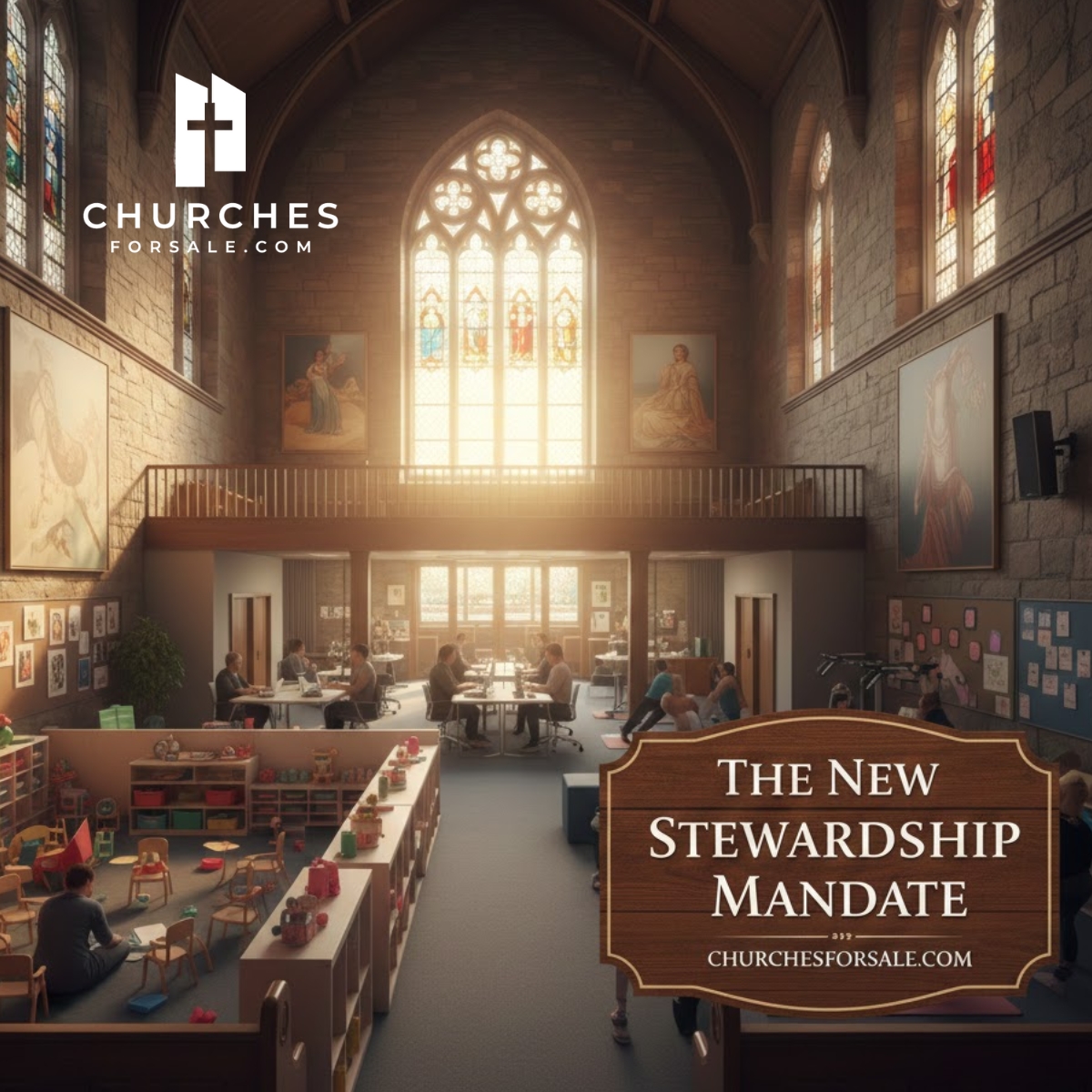
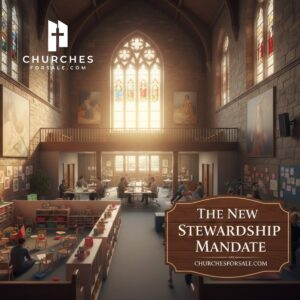
The New Stewardship Mandate: A Practical Guide to Generating Reliable Income Streams for Churches
Facebook
Twitter
LinkedIn
For generations, the model of church finance was simple: tithes and offerings covered the bills. Today, that model is under immense pressure due to declining giving consistency, skyrocketing operational costs, and the rising expense of maintaining older facilities.
Your church building, often your single largest and most valuable asset, may sit unused for 100 or more hours per week. Relying solely on the generosity of your congregation to shoulder this growing burden is no longer a viable long-term strategy for sustainability.
This is the essence of The New Stewardship Mandate: shifting your perspective from viewing your real estate only as a cost to manage, to seeing it as a tool to deploy for financial strength and community impact. This comprehensive church property leasing guide will walk church leaders and the real estate professionals who serve them through the vital strategic, legal, and financial steps required to successfully begin monetizing church property.
-
How to Lease Your Church Property: From Income to Impact eBook (Series Book 8 of 8)
$2.99 Add to cart -

How to Lease Your Church Property: Insurance+ eBook (Series Book 7 of 8)
$2.99 Add to cart -
How to Lease Your Church Property: Leases eBook (Series Book 6 of 8)
$2.99 Add to cart -
How to Lease Your Church Property: Money Matters eBook (Series Book 5 of 8)
$2.99 Add to cart
The Strategic Imperative: Why Underutilized Space is a Missional Liability
Many churches struggle with a “Deferred Maintenance Time Bomb” which may at times be millions of dollars needed for critical repairs like roofs and HVAC systems that are simply impossible without non-tithe income. When facility costs become tight, essential maintenance is deferred, forcing leaders to divert mission funds or face structural failure.
Underutilized space is a missional liability because it:
- Diverts Resources: Every square foot costs an estimated $1.50 to $3.00 per year to heat, cool, light, and maintain, regardless of whether it’s used. If that space isn’t actively serving ministry or generating income, it is pulling funds away from youth programs, outreach, and staffing.
- Limits Community Impact: A locked building outside of Sunday worship is a missed opportunity. Leasing can transform your property into a vibrant community hub, providing services and resources to your neighbors every day of the week.
- Creates Strain: An aging, under-maintained building sends a message of decay and limits the church’s ability to be generous to the community.
By generating non-worship income streams for churches, you transform a financial burden into an asset that funds the mission.
Action Step: Identifying Your Hidden Assets
Crucially, you must also assess Infrastructure Readiness. Can the leased space be independently climate-controlled? Is the Wi-Fi secure and separate? Are fire safety and egress points up to current commercial code for the proposed use (especially for daycares)?
The Financial Challenge: Navigating UBTI and Debt
Generating revenue is only half the battle; the other half is managing those funds correctly. Because rental income operates outside of the traditional tithe, it requires distinct financial discipline and tax awareness.
Understanding Unrelated Business Taxable Income (UBTI)
The biggest financial complexity churches face when leasing space is the potential for Unrelated Business Taxable Income (UBTI). While churches are generally exempt from federal income tax, income generated from a trade or business that is regularly carried on and is not substantially related to their tax-exempt purpose may be taxable.
The Safe Harbor vs. The Danger Zone:
- Safe Harbor (Generally Exempt): Income from simply renting real property (land or buildings) is usually exempt from UBTI.
- Trigger Warning (UBTI Risk): Providing significant services to a tenant (like daily catering or maid service) can trigger UBTI, as the IRS may view it as an active business.
- CRITICAL WARNING: The Debt-Financed Property Problem (UDFI): If the leased portion of your building is financed with debt (a mortgage), the percentage of the rental income corresponding to that debt is almost always considered UBTI. This is known as Unrelated Debt-Financed Income (UDFI) and is the single most common reason churches face tax complications.
Action Step
You must always consult a CPA or tax attorney specializing in non-profit finance before entering into any long-term, high-value lease, especially if you have an outstanding mortgage.
Budgeting for Sustainability
Dedicated Fund Approach: Mixing rental income and expenses into the general fund leads to confusion. You should establish a separate, dedicated fund (e.g., “Facility Use Fund”) to track all rental revenue and direct operating expenses related to the leasing program.
The Replacement Reserve Fund: When you open your doors, you invite additional usage, accelerating wear and tear. A percentage of the net rental income (commonly 10%-20% must be earmarked for a Replacement Reserve Fund to cover the increased deterioration (like carpet and paint replacement) without drawing from tithes.
The Legal and Liability Challenge: Drafting a Rock-Solid Lease
The lease agreement is the single most important document you will create, serving as the legal blueprint for your relationship with the tenant and defining every right, responsibility, and restriction. A one-page document downloaded from the internet exposes your church to massive liability.
Final Warning: You must retain a qualified, local attorney, ideally one familiar with non-profit or real estate law, to draft or review every single lease and use agreement.
Lease vs. Facility Use Agreement
It’s critical to use the right type of agreement to avoid granting unintended rights to a tenant.
- Lease Agreement (Long-Term & Exclusive): Grants a tenant exclusive use of a defined space for a set period (usually 6 months or more). Use Case: A full-time daycare, a long-term non-profit office, or a commercial kitchen lessee.
- Facility Use Agreement (Short-Term & Non-Exclusive): A simpler document granting a user permission to use a shared space at specific, limited times (it is a license, not a leasehold) – Use Case: A Saturday wedding, a weekly fitness class, or a one-time concert.
Critical Clauses for Ministry Protection
Standard commercial leases lack clauses essential for protecting your mission, property, and tax-exempt status. Ensure your attorney includes these three non-negotiables:
- The Use Restriction Clause (The Most Important Clause): This is your primary tool for mission alignment. It must explicitly state what the tenant is allowed to use the premises for, and, critically, state that any use “inconsistent with or contrary to the Lessor’s doctrinal, religious, or moral beliefs, is strictly prohibited” and constitutes a material breach.
- Insurance and Indemnification Clause: This legally transfers the risk of the tenant’s activity to the tenant. It requires the tenant to hold insurance and to legally defend the church if someone is hurt as a result of the tenant’s operations (detailed in the ebook).
- Ministry Priority Clause (For Shared Spaces): For spaces like a fellowship hall, this clause reserves the right for the Lessor to preempt a scheduled tenant use for a major church-wide ministry event (like a funeral or memorial service) with minimum notice, providing a pro-rata refund.
The Code of Conduct Addendum
The lease is the legal “what”; the Code of Conduct is the behavioral “how”. This Addendum sets the day-to-day rules for sharing the ministry space, covering practical items like:
- Access & Security (Key fobs, after-hours protocols)
- Parking (Designating tenant zones to save prime spots for church guests)
- Prohibited Items (Alcohol, tobacco, firearms)
- Common Area Use and Cleaning responsibilities
Your Next Steps to Financial Sustainability
The journey from a locked, underutilized facility to a vibrant community hub is significant, but the rewards of financial stability, renewed ministry funding, and deeper community presence are transformative for your ministry.
If your church is facing the challenges of rising costs, mounting deferred maintenance, and declining giving consistency, now is the time to embrace The Church Property Stewardship Mandate eBook Series.
ChurchesForsale.com is the authority resource for navigating this specialized area of real estate. To get the full, detailed roadmap for successfully auditing your space, setting profitable rates, and establishing the robust legal frameworks needed for your ministry’s protection, we invite you to take the next step.
Ready to Transform Your Church Property?
Purchase the Ebook: Get the complete deep-dive series, “The Church Property Stewardship Mandate,” which includes chapters on pricing strategy, audit checklists, tax compliance, and drafting every critical legal template. This is the professional guide your Facility Stewardship Team needs.
Property Valuation: If you are unsure of your property’s market potential or need to establish a baseline for your leasing income strategy, contact us for a professional church property appraisal consultation. Contact Nate Bradley (Nate@churchesforsale.com) for more information.
More Resources
Navigating Church Real Estate Financing: Options for Buyers and Sellers in a 2026 Shifting Market
Partnering with Brokers: How an Opinion of Value Accelerates Church Real Estate Deals

Beyond YIGBY: Innovative Repurposing Ideas for Church Properties in 2026 – From Community Centers to Mixed-Use Developments

Yes in God’s Backyard: Leveraging Church Land for Affordable Housing Partnerships in 2025
The New Stewardship Mandate: A Practical Guide to Generating Reliable Income Streams for Churches
Financial Steps for a church Buying a church Property: What church leaders need to know
Fractional CFO Versus Bookkeeper—What’s the Difference for churches and church leaders?
